English
 Tiếng Việt
 ไทย
ไทย Malay
Malay Indonesia
 Burmese
 ລາວ
ລາວ ជនជាតិខ្មែរ

As global industrial facilities tighten requirements for hazardous fluid handling, self‑priming anti‑corrosion pump solutions gain growing attention among process engineers worldwide. Integrated self‑priming structures remove reliance on continuous liquid filling before startup, enabling stable transportation of waste acid, electroplating waste liquor and various corrosive chemical raw materials from underground storage tanks and reaction vessels.
Modern self‑priming pump lines cover two mainstream technical routes: self‑priming magnetic drive pumps and shaft‑seal self‑priming chemical pumps. Self‑priming magnetic drive units adopt complete sealless magnetic coupling transmission, eliminating leakage risks caused by mechanical seal aging and failure, which fits high‑safety‑demand scenarios such as chemical agent dosing and high‑purity medium delivery. Meanwhile, elastic‑shaft‑seal self‑priming pumps optimize internal volute and gas‑liquid separation chamber structures, improving suction performance while controlling overall equipment investment cost.
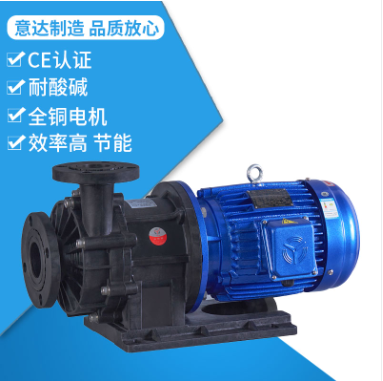
These product series obtain international CE compliance approval, with full‑copper motor configurations supporting continuous heavy‑duty operation. They are widely deployed for waste‑liquid collection in environmental engineering, chemical raw‑material unloading, and circulation loops for surface‑treatment production lines. Process plant operators highlight that standardized modular designs simplify on‑site installation and spare‑parts replacement, lowering long‑term maintenance workload.
Manufacturers keep optimizing mould precision for self‑priming flow channels and anti‑corrosion material formulations, to strengthen resistance against complex mixed corrosive media. For global buyers, complete model selection support including technical parameter sheets and downloadable product samples shortens evaluation cycles for cross‑border procurement of fluid‑transfer equipment.