English
 Tiếng Việt
 ไทย
ไทย Malay
Malay Indonesia
 Burmese
 ລາວ
ລາວ ជនជាតិខ្មែរ

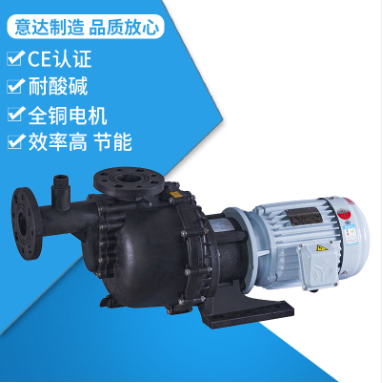
Numerous chemical processing and waste‑treatment scenarios demand pumping liquids from underground tanks, storage pits or transport containers, which sets high requirements for pump self‑suction performance. Ordinary centrifugal pumps need pre‑filling liquid inside casing before startup and fail to handle negative‑suction‑height conditions, while self‑priming corrosion‑resistant pumps with specialized gas‑liquid separation chambers can complete gas‑liquid mixing and exhausting automatically, realizing stable liquid suction without complex pre‑filling operations.
Two mainstream technical solutions serve differentiated market demands. Self‑priming magnetic‑drive pumps such as CQF‑Z series inherit seal‑free magnetic coupling design, completely eliminating leakage risk when transferring toxic, volatile and valuable corrosive fluids, well‑suited for high‑safety‑priority chemical workshops. YD series elastic‑shaft‑seal self‑priming pumps adopt fluoropolymer‑enhanced sealing structure, delivering stable self‑priming performance with optimized procurement cost for large‑volume waste‑liquid collection and delivery projects. All main wetted components use anti‑corrosive materials to adapt acid waste liquid, electroplating effluent and chemical agent transportation duties.
These self‑priming pump products are widely deployed for waste‑liquid delivery in chemical parks, chemical reagent unloading, plating‑waste‑water lifting, and medicine‑manufacturing waste‑fluid handling. Manufacturers keep optimizing gas‑liquid‑separation cavity precision processing to reduce air‑lock failure probability. Full‑copper high‑efficiency motors lower energy loss during intermittent and continuous operation. CE‑certified product specifications support bidding and construction requirements of international environmental‑protection and fine‑chemical projects, helping global clients achieve safer and more economical corrosive‑liquid transportation workflows.