English
 Tiếng Việt
 ไทย
ไทย Malay
Malay Indonesia
 Burmese
 ລາວ
ລາວ ជនជាតិខ្មែរ

Most corrosive fluid treatment procedures in global industrial sites involve harsh media including concentrated sulfuric acid, hydrochloric acid, sodium hypochlorite, hydrogen peroxide and various mixed corrosive solutions. Continuous operation under elevated temperature will accelerate molecular aging of ordinary engineering plastics, causing pump cavity deformation, inner wall corrosion and seal failure over long running hours. Such equipment defects will trigger unplanned shutdowns and raise operational expenditures for manufacturing enterprises.
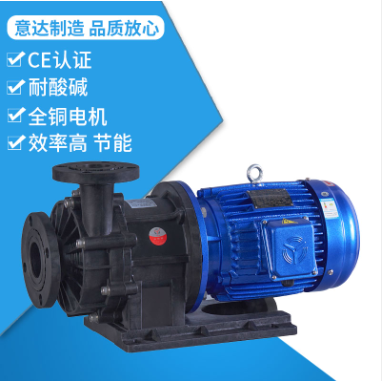
All wetted structures of Yida’s magnetic pumps, self-priming pumps and vertical circulation pumps adopt modified reinforced FRPP and high-purity injection-molded PVDF as core contact materials. Modified FRPP adds anti-aging fillers and fiber reinforcing agents during granulation processing, strengthening mechanical rigidity against liquid impact and slowing down material degradation under medium erosion. PVDF components adopt high-molecular-weight resin raw materials, delivering outstanding tolerance to strong oxidizing liquids and high-temperature corrosive media that FRPP cannot withstand, covering higher-end severe corrosion working conditions.
Strict injection molding and integrated molding processes eliminate internal pores and structural defects inside pump casings, impellers and isolation sleeves. Uniform wall thickness design avoids local stress concentration during fluid pressure fluctuation, greatly reducing the probability of pump body rupture under variable load working conditions. Compared with ordinary plastic pump products on the international market, the upgraded material configuration extends the average service cycle of wearing parts by a large margin.
For global users with graded corrosive medium requirements, Yida provides two matched material options. FRPP configuration satisfies conventional acid-base waste liquid, electroplating solution and general chemical circulation with superior cost performance; PVDF configuration targets high corrosivity, high temperature and strong oxidation scenarios such as PCB micro-etching liquid transportation and chemical oxidation wastewater disposal. The differentiated material matching mode helps overseas customers allocate equipment investment reasonably according to actual working conditions, avoiding excessive configuration waste or insufficient material grade leading to premature equipment damage. Stable material supply chain management ensures the consistency of plastic parts properties for long-term bulk export orders, supporting reliable equipment operation for global process production lines.